🏛️ History
The province was named after Queen Isabela II of Spain and was officially established on May 1, 1856. It was originally part of the province of Cagayan but was separated to become its own province. Throughout history, Isabela has been home to various indigenous groups including the Gaddang, Yogad, and Ibanag peoples, who have preserved their unique traditions and languages to this day.
🏙️ Capital City — Ilagan
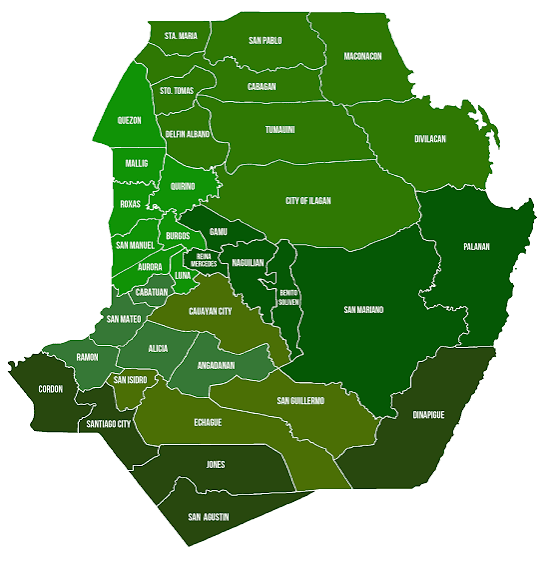
The capital of Isabela is the City of Ilagan, which serves as the center of commerce, governance, and culture in the province. Ilagan was officially converted into a city on August 11, 2012 through Republic Act No. 10169.
Ilagan City is widely known as the "Corn Capital of the Philippines" due to its massive corn production, contributing significantly to the country's agricultural output. The city is also famous for its historical landmarks, including the San Pablo Cathedral and the Ilagan Sanctuary, a protected forest reserve. Its thriving farming communities produce rice, corn, and various agricultural products that reinforce Isabela's title as the "Rice Bowl of the North."
🌾 Economy
Isabela is known as the "Rice Bowl of the North" due to its massive rice and corn production. The province is one of the top producers of rice, corn, and other agricultural products in the country. Major agricultural products include:
- Rice — The province's flagship crop
- Corn — A major contributor to the local economy
- Bananas — Grown in large quantities
- Coconuts — Used for various products
- Livestock — Poultry and cattle farming
👥 People and Culture
Isabela is home to a diverse population of around 1.6 million people (2020 census). The province's culture is a vibrant mix of indigenous traditions and Spanish-influenced customs. Major ethno-linguistic groups include:
- Gaddang — Known for their weaving and folk music
- Yogad — Preserving unique traditions and language
- Ibanag — One of the oldest communities in the region
- Ilocano — The largest linguistic group
- Tagalog — Widely spoken in urban areas
🏛️ Government
The capital of Isabela is the City of Ilagan, which is also the center of commerce and governance. The province is politically subdivided into 34 municipalities and 2 cities (Ilagan City and Cauayan City), with a total of 1,055 barangays (villages).